
Powered By



Newborn screening checks babies for a variety of health conditions, including sickle cell disease (SCD) and sickle cell trait (SCT). If your baby’s test results suggest either of these, you may have more questions than answers. You may wonder what the results mean and what happens next.
A newborn screening result doesn’t by itself confirm that your baby has SCD. Additional testing can help clarify the result and the next steps. Understanding what newborn screening checks for and what confirmatory testing may involve can help you feel more prepared.
Sign up to view the results!
 Continue with Facebook
Continue with Email
Newborn screening is a blood test that checks a baby for SCD or sickle cell trait. In the United States, all newborns are screened for sickle cell disease, regardless of race.
Newborn screening usually happens within 24 to 48 hours after birth, but it may also be done before the baby is discharged. A healthcare provider collects a small blood sample with a quick heel prick and places it on a blood spot card for testing.
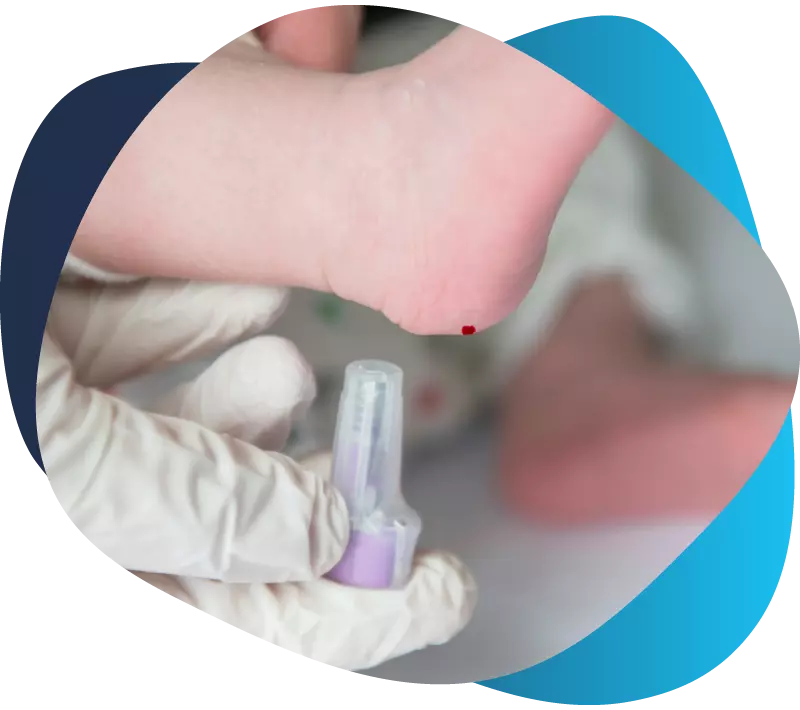 The sample is sent to a laboratory, where the hemoglobin pattern is analyzed. The results may suggest SCD, SCT, or another hemoglobin condition. The time it takes to receive the results can vary depending on the screening program and the findings.
Some babies may need another sample or additional testing if they were born prematurely, received a blood transfusion right before screening, or had other factors that could affect the test results.
If the newborn screening result suggests SCD, your baby will need confirmatory testing. Your healthcare provider can help make sure this testing is completed before your baby turns 2 months old. However, the timing may vary depending on where you live.
A newborn screening test looks at the hemoglobin pattern in a blood sample. The pattern can point toward sickle cell disease, sickle cell trait, or another hemoglobin condition.
However, a screening result doesn’t confirm a diagnosis. If the hemoglobin pattern falls outside the expected range, your baby may need more testing to find out what it means.
Newborn screening results may be reported using combinations of letters that describe the hemoglobin pattern. Your healthcare provider can explain what the result means.
Some screening patterns may suggest SCD. An FS pattern, for example, may indicate hemoglobin SS disease, sickle beta-zero thalassemia, or another form of SCD.
An FS hemoglobin pattern on a screening test means the blood sample contains fetal hemoglobin (F) and sickle hemoglobin (S), but no detectable normal adult hemoglobin (A).
Other hemoglobin patterns can suggest conditions such as sickle cell beta thalassemia or hemoglobin SC disease. But a screening pattern alone doesn’t confirm an exact diagnosis.
If the results suggest SCD, follow up promptly with your healthcare provider for confirmatory testing. Early diagnosis and intervention can help prevent serious complications.
A newborn screening result that suggests sickle cell trait is different from one suggesting SCD. Babies with SCT have one sickle hemoglobin gene, usually don’t have symptoms of SCD, and can pass the gene to their biological children later in life.
A screening result suggesting SCT still needs confirmatory testing. Your baby’s healthcare provider can explain what the result means for your baby and your family. Genetic counseling may also help you understand how SCT can be passed through families.
Newborn screening results may need additional testing because the initial test can’t always confirm the diagnosis or determine the exact type of SCD.
Certain factors can also affect the results. For example, a red blood cell transfusion before screening may make it harder to accurately assess the baby’s own hemoglobin. Premature babies may also need additional testing.
Your healthcare provider can tell you whether your baby needs another screening sample, confirmatory testing, or both.
If your baby’s screening result falls outside the expected range, follow-up testing is the next step. Your healthcare provider can explain what the result means, what testing is needed, and when to have it done.
Confirmatory testing may involve blood tests that analyze the hemoglobin pattern. These may include hemoglobin electrophoresis or isoelectric focusing, which can provide more information about the hemoglobin pattern.
Your baby may also see a pediatric hematologist or another specialist experienced in caring for babies with hemoglobin conditions. If your baby has SCT, the sickle cell care team can discuss genetic testing for other family members.
A new SCD diagnosis can leave you with many questions. Early follow-up gives you a chance to learn which symptoms need urgent medical attention, what treatments your baby may need, and when to contact the care team.
If confirmatory testing shows that your baby has SCD, early follow-up can help your baby start preventive care in early infancy. Some preventive treatments can help reduce the risk of serious infections in infants with SCD.
Babies with SCD may need antibiotics such as penicillin, recommended vaccinations, and regular medical care. Early intervention with these measures can help reduce the risk of infections, which are a major cause of death in children younger than 5 with SCD.
As your baby grows, the sickle cell care team can monitor for SCD complications such as acute chest syndrome (a serious lung complication). They may recommend treatments such as hydroxyurea or certain tests to check for stroke risk.
If your baby is diagnosed with SCD, ask your healthcare team to explain the diagnosis and care plan clearly. The amount of information and support families receive after diagnosis can vary. If you still have questions, ask for additional education, reliable resources, or a referral to a sickle cell specialist, genetic counselor, or support organization.
You don’t have to figure out your baby’s results on your own. Asking questions can help you feel more prepared for what comes next and understand what care your baby may need.
Get updates directly to your inbox.




 Continue with Facebook
Continue with Email
Continue with Facebook
Continue with Email
Become a member to get even more





 Join

 Your Privacy Choices

This is a member-feature!
Sign up for free to view article comments.
We'd love to hear from you! Please share your name and email to post and read comments.
You'll also get the latest articles directly to your inbox.