
Powered By



A sickle cell leg ulcer can add another challenge when you’re managing other symptoms of sickle cell disease (SCD). When a wound develops, you may not know whether you should be worried, whether you can manage it at home, or when to seek care.
Seeking care can be difficult if your chronic pain or other concerns have been dismissed before. Whether you’re living with SCD or caring for a child with the condition, it’s important to know how to care for a sickle cell leg ulcer, manage pain, and find support.
Sickle cell leg ulcers are open sores that develop on the legs and take longer to heal than a typical wound. They most often form around the ankle, though they can also appear on the lower leg or foot.
Sign up to view the results!
 Continue with Facebook
Continue with Email
Continue with Facebook
Continue with Email
A leg ulcer can start after an injury, like a bump or scratch, or appear without an obvious cause. You may have just one, or several smaller ulcers that join together to form a larger ulcer.
A sickle cell leg ulcer typically has clearly defined, raised edges. You might also notice:
Leg ulcers can be acute or chronic, depending on how long they take to heal. An acute ulcer may heal within a month. Chronic ulcers can persist for six months or longer and recur over time.
If you’re not sure whether a wound is a sickle cell leg ulcer, ask your doctor to check it. They can help you understand what you’re dealing with and recommend the right care.
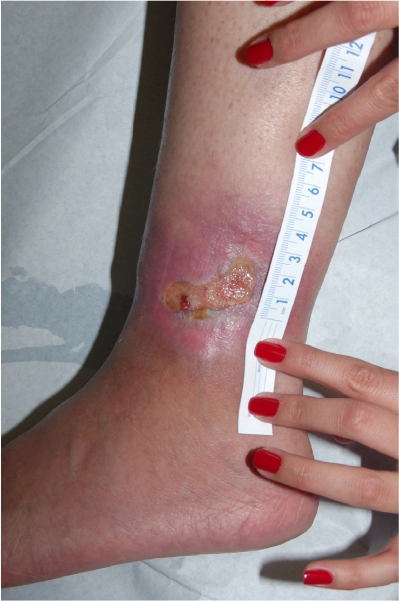
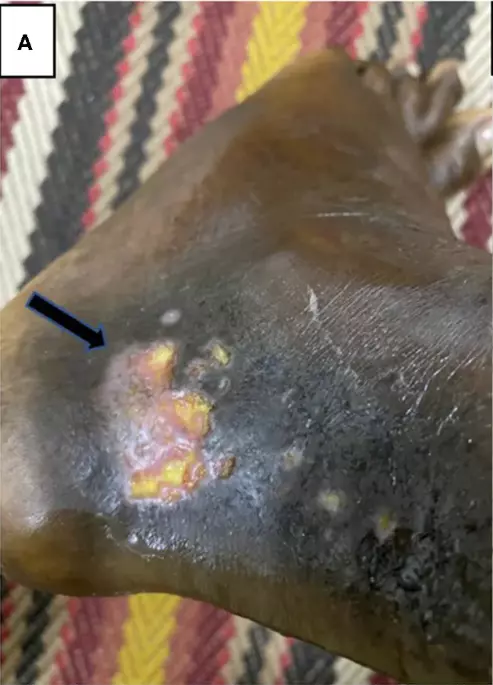
SCD can reduce blood flow through the small blood vessels in your legs. Abnormally shaped red blood cells can become rigid and less flexible, making it harder for them to move through these tiny vessels.
When blood flow is reduced, less oxygen reaches your skin. Reduced oxygen supply makes skin more vulnerable to injury and slows wound healing. As a result, even minor injuries or repeated friction can lead to a sore that takes longer to heal.
Ongoing inflammation and changes in blood vessel function can further increase the risk of developing a leg ulcer and may also slow healing.
Treatment for sickle cell leg ulcers focuses on wound care, protecting the area from injury, and managing pain. Even with treatment, though, leg ulcers can be difficult to heal.
Gentle cleaning helps keep the leg ulcer clean while it heals. Your healthcare provider can choose an appropriate dressing based on the wound and adjust it as needed.
If tissue in the wound is too damaged or dead, your healthcare provider may recommend debridement, a procedure that removes the tissue to help support healing.
Some people may try topical herbal treatments for leg ulcers. But an older article from the American Journal of Hematology noted that evidence for this type of treatment is limited.
You can protect your leg ulcer from injury while it heals by wearing shoes that fit well and don’t rub against the affected area.
If you notice swelling around your leg ulcer, your doctor may recommend compression therapy or elevating the leg to help manage it.
Don’t use compression bandages or stockings on your own, though. Your doctor needs to check what’s causing the swelling first and confirm whether compression is safe for you.
When the ulcer isn’t healing as expected, your doctor can reassess the wound and look for possible causes.
They may refer you to a wound care specialist or a hematologist to look for other SCD complications that could be affecting how the wound heals.
Depending on the wound and how it responds to treatment, a specialist may consider other options, although evidence for many of them is limited. Options may include:
More research is needed to understand which of these options work best for sickle cell leg ulcers.
You should talk with your healthcare provider if you notice any of these changes:
These changes may mean the wound is infected or isn’t healing as it should.

Sickle cell leg ulcers can make it harder to walk, sleep, work, or keep up with your usual routine. Pain and limited mobility can affect what you’re able to do each day.
You may feel frustrated when your leg ulcer is healing slowly, especially when you’re doing everything you can and the ulcer isn’t improving. You may also worry about how long it will take to heal, whether it will come back, or how it looks.
A sickle cell leg ulcer can affect your social life, too. You might find yourself avoiding social plans, covering up your leg, or spending more time at home because of pain or concerns about how others will react. Over time, these challenges can affect your quality of life.
If a leg ulcer is making it harder to cope or affecting your mood, consider talking with a mental health professional. They can help you manage stress, talk through difficult feelings, and cope with body changes or chronic pain.
Family and close friends can also offer support with day-to-day activities, such as driving you to appointments, helping with dressing changes, or simply checking in. Sickle cell support organizations can connect you with people who understand what you’re going through.
Once a sickle cell leg ulcer heals, protecting your skin and following your sickle cell disease treatment plan can help reduce the risk of developing another ulcer.
You can reduce the risk by:
If you notice a new sore or changes in an area where you’ve had an ulcer before, talk with your healthcare provider right away rather than waiting for it to get worse.
Get updates directly to your inbox.




 Continue with Facebook
Continue with Email
Continue with Facebook
Continue with Email
Continue with Facebook
Continue with Email
Continue with Facebook
Continue with Email
Become a member to get even more





 Join
Join

 Your Privacy Choices

This is a member-feature!
Sign up for free to view article comments.
We'd love to hear from you! Please share your name and email to post and read comments.
You'll also get the latest articles directly to your inbox.